Monday, July 4, 2011

Reflection 3: Community and Rootedness

This is my final post for the summer.

One of the first questions in the exchange one has with fellow Amtrak riders is "Where are you coming from/going to?" As you might suspect, I found it difficult to answer that question. I'm from the Dallas area, even though I actually started out in Boston and my final train took me to Houston, but I traveled from Seattle to San Jose along the way, for example. The quickest way to explain was to say I had just graduated and was traveling the country, and at that point, people could identify me as temporarily placeless.

My trip relied on a far-flung network of friends that I have made during my college years, both from Olin, where I've met people from all over, and from my summer jobs in San Diego/Tijuana, Minneapolis, and Dancing Rabbit Ecovillage, where I met people from even more parts of the country. These connections allowed me to find welcome everywhere I went. Unfortunately, I cannot gather all these connections together in one community, since a functioning community, in my opinion, requires geographic proximity.

Olin and Oliners have been my home for the last four years, but in that time, the distance from my family has worn on me, and I feel a strong desire to be closer to my parents and sister, so I can be with them more often. For this reason, I intend to stay in Texas, which also means there a lot of people I may not see again for quite some time. So I took this trip to catch up and say goodbye for a while to those friends who live far away from the Lone Star State.

My placelessness is acute, because I have left Olin to come back to Flower Mound to live with my parents. Both places feel like home, but I also know that I will be moving out as soon as I find a job. Regardless, I want once again to become rooted in a place, and I am much more comfortable with that proposition knowing my family is close by. But I recognize that there are other communities and networks I want to take part in, like the church and the local food community, and I want to lend a helping hand to those in my community who are in need. I can't wait until I can grow some of my own food and actually frequent a farmer's market and have people over for potlucks. These are all things that I want to do as soon as I am out on my own.

Even though I feel like a transient in Flower Mound, I'm trying to get re-involved in this community, to understand what's going on here, and to help those in need. It is sometimes difficult for me to put energy into this, since I know I could find job next week, but that's no excuse not to reach out to those around me today. And lest I get to carried away with my ideas and my hesitation to reach out because I may not be around for very long, I remember what Dietrich Bonhoeffer once wrote:

"Love community, and you will kill it. Love your brother, and you will build it."

In Tucson, I talked with my friend Ali about "intentional community". My experience with that has been in the context of gathering around ecological sustainability at Dancing Rabbit, but she said it was worthwhile just to live in community, and I think she's right. I want to live closely with other people, my life integrated into theirs and theirs into mine, and I look forward to doing that, wherever I end up.

Thanks for reading and adios,

Sunday, July 3, 2011

Reflection 2: Computer Use

I intentionally set out on my travels sans laptop because I had been plugged in for so long at Olin, and because my laptop is kind of heavy. Either way, doing so helped me travel light, since being tethered to an Internet connection or an electrical outlet are just different kinds of baggage.

I found that when I was en route, I rarely wanted to use a computer. Now I'm not saying we shouldn't use computers. It would be unfair to make that generalization, as I wasn't trying to get any work done or make any complicated plans. But I am saying that there is no reason why I need a computer to keep myself entertained, even for periods of train travel in excess of 24 hours. And for me, it is desirable to minimize my contact with them because they are gateways to distraction.

When I was visiting someone, I invariably used their computer, unless they didn't have one. However, in these cases, my computer use was impacted by the fact that I was using the computer as a shared resource, rather than as something belonging solely to me. Because I knew there might be another requiring or desiring its use, I strove to use it as efficiently as possible. Without this pressure, I am tempted to spend too much time in front of a computer screen, as I have done while finishing up my blog at home. It's so easy to open up multiple extra tabs or programs for the sake of listening to some music, reading a little bit of news, and catching up with friends, all of which slow my writing, do not get my full attention, and ultimately divert me from doing the things I really want to do. So here's to finishing up these posts soon and minimizing distractions along the way.

Saturday, July 2, 2011

Reflection 1: Distance and Geography

Well, I'm all out of destinations to write about, but I still have a few things to say. These trains of thought (yeah, pun intended) began on my travels, and I'm bringing them to completion here. Here's the first one.

"You cannot count the miles until you feel them"
-Townes Van Zandt

As someone who has traveled significant distances on multiple occasions by both by air and rail, I think that plane travel teaches us some lies about geography that train travel can help correct. Flying convinces us that the world is an archipelago of familiar places instead of a vast, largely unknown continuum with pockets of familiarity. When you take the train, you realize that there are places as real as your destination at every step along the way. Some may be more populated, or more scenic, or more historic, but you experience them all from the same perspective. Flying obscures this because only the end points are really felt by the traveler. The in-between is seen from 30,000 feet, and therefore we cannot encounter it in the same way. We get no sense for what the people, plants, or animals are like. The world is conformed to a map we see from above rather than a landscape we can see ourselves in.

In addition to obscuring the vastness of our planet and the reality of all its parts, flight also obscures distance. On the train, you are able to "count the miles" because you feel each one go by from the same vantage point as you experience distance in the rest of your life: walking, driving, biking, and training all position you a few feet off the ground, adequate for observing the details of scenery.

I don't want to overstate my case, because flying teaches us the obverse: that all places, our entire planet fro that matter, are small and finite. And that there is great beauty to our planet when viewed on a grand scale, i.e. from 30,000 (or more) feet.

I flew from Seattle to L.A. for reasons that are too complicated to explain in this post, but doing so afforded me the opportunity to see Mt. Rainier rising up through a blanket of clouds above Seattle. I could not have seen this by staying on the ground, and it was truly impressive. And in Albuquerque, I took a tram up to Sandia Peak that, at is highest, suspended us 1,000 feet above the ground below. Again, that view could not be equaled staying grounded.

But both of these are vistas and not worlds. They appear uninhabited, except for your fellow passengers in whatever metal box you happen to be traveling in. On the train, you are similarly confined, but you are everywhere confronted with how places are populated and how far apart they really are. So try taking the train, it's worth the extra time.

Thanks for reading,

Friday, July 1, 2011

Graphical Summer

This post is for the nerdy, data-visualization enthusiasts out there. Just as my summer so far has been varied in geography, it has been varied in temperature and humidity. First, I present a simple plot of average temperature and humidity as a function of the day, the starting at graduation and ending yesterday. The discontinuities indicate where I was on the train for an extended period of time. I experienced a range of average temperatures from 49 to 90 F, and a range of humidities from 8 to 93%.


The second graph plots the humidity against the temperature to show the different regimes of U.S. summer that I experienced. I clustered the destinations by region and time, so that the legend reads in chronological order. Note that the lower the humidity, the wider the spread between high and low temperatures (for example, in Albuquerque and Tucson). The highest temperature I experienced was in Tucson, at 105 F. I do not know the lowest low because I slept inside, and I never wondered how cold it was. Perhaps the most noticeable weather event of the entire summer was when the average temperature in Milwaukee rose by 22 F in two days. You can see this in the two red line segments that traverse the "Midwest" cluster from top left to bottom right. I am now at the bottom right of the "Texas" cluster, reveling in the heat and mild (compared to Houston) humidity.
All data from http://www.wunderground.com/history/

Thursday, June 30, 2011

My Trip in Books

Traveling by train means having a lot of time to read, and I think it fitting to honor my traveling companions. Since graduation, I have finished 5 books and read parts of 4 more.

The first, I started in the last week of school, before I left. I finished it in the waiting room of Needham Orthopedics. Leading up to graduation, I had much difficulty scheduling an appointment, so the day after commencement and before I set off across the country, I went into the office, explained my situation, and I sat down until I saw Dr. Savenor. Thanks to Bryson, I had something to laugh about instead of contemplating the possibility of lugging my immobilized left wrist around 'til July.


Just as Virgil guided Dante through Heaven and Hell, the Roman bard accompanied me from Boston to Milwaukee. I had been meaning to read The Aeneid since I took Latin in high school, and it proved to be an epic adventure, quite unlike anything else I have read recently. It felt strange to be doing something so pedestrian as riding a train, reading a book, while Aeneas faced fearsome armies and the wrath of Juno.


Before I finished the Aeneid, I spent an interlude at Dancing Rabbit reading parts of two books from their library. I needed a break from epic battles set in dactylic hexameter. Respite was provided by Ray Bradbury, whose collection, A Medicine for Melancholy, is notable for skillfully creating moods. I had never read anything by Wendell Berry before, but now I want to read more. His essays muse on community, local economy, and our ecological impact, all things that have been brewing in my head for the summer.


Upon finishing the Aeneid, I felt like rereading something, and in Tess' basement I found The Grapes of Wrath, which she let me take with me. Steinbeck is my favorite novelist, and this is one of my favorite books. I read it first in high school, but this time, I saw the story through the lens of community at Dancing Rabbit, seeing migrant strawberry pickers in California, and being a wanderer myself.


I found the next selection at a used book store in Albuquerque before I departed for San Jose, and it lasted me until I came back to Tucson. It's one I'll need to reread, for Martin Buber is much like Kierkegaard, in that his language is so convoluted that it's easy to spend all your time trying to understand what he's saying without asking whether or not he's right. That said, Buber's idea about how we relate to others as "You" or "It" is compelling. I definitely default to interacting with others as third person characters in my life as opposed to beings making their own way in the world, just as I am.


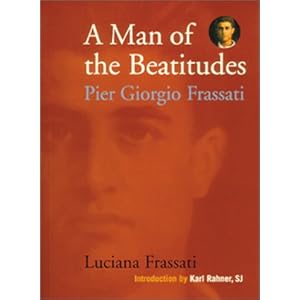
Erik Kennedy recommended this one to me. Frassati was a likable engineering student who died at 24 of polio. He was politically active and notable for befriending and financially supporting poor neighbors. After he died, it emerged that he had extended network of such friends, to whom he devoted much time, energy, and money. For his simple life of good works, he has been beatified by the Catholic Church, which means you can call him "Blessed Pier Giorgio". I didn't have time to finish his story, but I aim to at some point.


While staying with my sister, I availed myself of one of their many books. I picked it up because I've heard so many people rave about Blue Like Jazz. I even once saw it tagged with a "read with discernment" label in a Christian bookstore, because of its liberal leanings. Donald Miller writes as he is, a Christian who struggles to claim and live up to that name, and who mourns fundamentalism and hypocrisy in the church. I ended up reading about half of the book, and I'll probably read the balance eventually.


This last book was a real treasure. Jane Goodall is a scientist and writer of exceptional compassion, which is evident if you read any chapter of Through a Window. It caught me off guard at first, because most scientists write with a colder, more objective one, but Goodall tells the stories of the chimpanzees at Gombe as if they were her family or friends. I was amazed at the similarities between chimpanzees and humans, in their capacity not only for gentleness and caring, but also for violence and hunger for power.


To Bryson, Virgil, Bradbury, Berry, Steinbeck, Buber, Frassati, Miller, and Goodall: Thank for you for a great trip.

Wednesday, June 29, 2011

Houston

Ah, Houston, the last major city of my travels (sorry College Station, you don't quite count). I had begun to grow a little travel weary after over a month on the road, so I was glad to arrive at my sister's apartment. I had been there before, and as a family member, I felt more like I was at home than on vacation. We cooked dinner, watched Inception, and played non-competitive Taboo with her husband, Josh. It turns out Taboo is just as fun when everybody wins, so don't let anybody ever tell you you can't play it with three people.

We also went to see the Houston Symphony at Hermann Memorial Park. They played, among other things, Tchaikovsky's Symphony #5, which was my favorite part of the concert. The weather was just right, which, for Houston at this time of year, is saying a lot.

My last night on the road was spent at the residence of Amanda and TJ White, friends from high school who got married in January. TJ is commuting from College Station to Houston to work for BP, so we had a nice long drive back from the city to catch up. He had just finished his first day, which sounded like an arduous string of HR info sessions. Amanda had also had long day, so we had a quiet evening: dinner, a little talking, and off to sleep. Let it be known that TJ went to bed before me and woke up long before me. This may be a first.

Sunday, June 26, 2011

In Between Pictures

These pictures were taken from the train near Palm Springs, CA, and El Paso, TX. Neither was my destination, but I felt compelled to document each of them. All of these images look dusty, which is due in part to the fact that these places are dusty, but also due to the sepia tinge that Amtrak's aged windows add to pictures taken through them.

If you've talked to me for very long, you know that I care about the environment, and that I think renewable energy generation is an important step we must make toward make our society more sustainable. So I found the hundreds (almost certainly thousands) of wind turbines near Palm Springs, CA, heartening. We actually did stop there for a smoking/fresh air break, so I can personally attest to the wisdom of siting the turbines there. I don't know how people managed to light their cigarettes in the blustery wind, but on Amtrak, there is little that can stand between a smoker and a smoking break.


As we neared El Paso, we also neared Ciudad Juarez, Mexico, which holds a special place in my heart. In this picture, you can see the border wall and Juarez behind it. I visited Juarez four times in high school with Amor Ministries, building houses over spring break each time. After my senior year, Amor stopped working there because of escalating drug cartel violence, around the time the state department began to issue severe travel warnings for Juarez. It makes me sad, because I know that there are good, beautiful people in that city. I only know a handful whom I built houses for, but surely there are hundreds of thousands more. The demand for drugs elsewhere and the violence of the cartels in the city strangle the good work that people want to do there.


The border is has a lot of industry along it, probably due to the abundance of cheap labor on one side for factories on both sides, which may very well be owned by corporations in neither country.


I barely caught this last one. Who knows what's in this tank, or what it has to do with Jesus? Someone affirms that he lives, and I believe this too, but I'm torn as to how to take the message in this context. Is it heartening, signifying to people that drab industrial work and industrial pollution are not the last word on life? Jesus said we could see him in the faces of the poor, and I think if I spent enough time in the area, I would. So in spite of industry, Jesus lives among the people here.


But I can't shake this idea, that if Jesus does live, why are things still drab, dry, and polluted? Shouldn't we make something better if our Lord lives? Ultimately, both of these responses coexist within me, wanting something better while acknowledging Jesus' presence in an imperfect world.

Peace to you,

Tucson

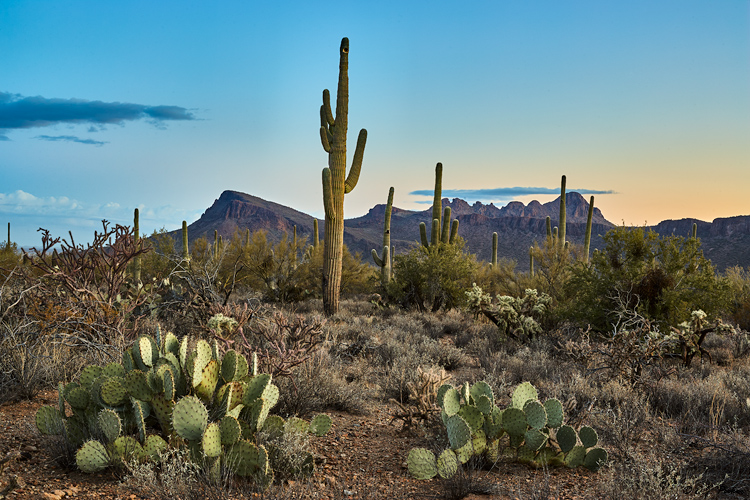
Tucson, more than any other destination, gave me a lot to think about. I guess I was thinking too much to take any pictures. It was very beautiful, though, and I want to do it justice. Here's a picture someone with a better camera took of the Sonora Desert. Isn't it nice?

Photo Credit: E.J. Peiker

In Tucson I stayed with my friend Ali, who is working for Borderlinks, a non-profit that does experiential education about immigration, border economics, and poverty. They also cook meals for their groups, so I got to help out with that when I was in the office.

One night, we went to the Greyhound station. Every night, people released from the Eloy Detention Center, whose "customer base" is the Bureau of Immigration and Customs Enforcement are dropped off at the Tucson Greyhound station. If they're lucky, they can catch a bus that night, but if they're not, they have to wait until the morning. Unfortunately, the station closes between 11:45 PM and 5 AM. We went to talk to the people arriving from Eloy, make sure they had tickets, and find a place for them to stay should they need it. Luckily, everyone had tickets already. My Spanish is abysmal, so my friend and a couple of other people did all of the talking, but I'm glad I went. I never would have imagined that this need was there unless I had been shown it. Seeing that makes me want to seek out where people need help in my community when I get back home.

We also visited the Arizona Sonora Desert Museum, where we saw lots of native plants and animals. The undisputed highlight - which topped even the adorable napping of desert mammals - was watching the curious behavior of two nest-builders. One bird was perched in the beginnings of a nest, sitting precariously where a cactus arm reached out from the main stalk. The other bird would fly down to the ground, search for and find the perfect twig, fly back, and land on the back of the other bird to place the twig. They repeated this process for quite some time while we watched and laughed.

Wednesday, June 22, 2011

Seattle

Note: I'm in Houston at present, and I'll be back in Flower Mound tomorrow, but stay tuned! I'll be updating pretty frequently to get posts up about each of my stops as well as some overall reflections about my experience.

I've been to Seattle a couple of times before, but always in the context of family vacations in the surrounding area - Olympic National Park, an Alaskan Cruise - so I was eager to visit it on my own and see it anew.

The new stuff began hours before reaching the city because of my different method of approach, as we crossed through the Cascades in Oregon and Washington. The views were enchanting, and I recommend taking the train up the West coast, the Coast Starlight, to see them for yourself.


I didn't go up in the Space Needle, but I did stitch together some images of it after walking past it to go to lunch. There was more to the panorama, but I learned an important lesson: never take panoramas of scenes with moving traffic unless you are really, really good at it (which I am not).


Perhaps the most unusual thing that I saw in Seattle was something in Pioneer Square that defies easy description: guerrilla knitting installation art, perhaps? There was a woman in the square actively attaching these knitted sleeves to light posts, trees, and street lamps, adding bright splashes of color to the peaceful, muted square.


In addition to Seattle proper, I spent one day on Vashon Island with John Rosenwinkel (Olin '11.5). To get there, I took a ferry from downtown and then hopped a bus on the island to Burton, where John is living. After John and I had been walking a bit along the road toward his house, I noticed a profound difference between Vashon and Seattle - really between any isolated area and the nearest major city - it was quiet, blessedly quiet. With Vashon the difference is magnified by the closeness of downtown Seattle and Tacoma, but because that distance is over water, the island is like a different world.

On Vashon we ate wild fennel from the side of the road. We went kayaking to an uninhabited beach on the island, where there were innumerable sand dollars. Kayaking gave my arms a workout they had been missing for a few months. Having broken my left wrist in February, I was very pleased to be able to do this.

My final night in Seattle was spent having Indian food with a whole mess of Oliners working for Microsoft as interns and full-timers. It was good to see them all.

Tuesday, June 14, 2011

Mountains, Trees, Bridges, and Hills

Greetings from Los Altos, CA! I'm staying with Travis Schuh (Olin '12) and his family. On Sunday, I went hiking with Travis and his dad in Big Basin Redwoods State Park, where I saw some very large Coast Redwoods and Douglas Firs, including one 2000-year redwood! This means that Jesus and this tree were saplings together, although a world a part.

We had a great hike up and down and up in the mountains, with some great views of the ocean along the way. In one of the sunnier spots, we snagged a picture.


We then descended to Berry Creek Falls, where I found an eminently huggable and exceedingly large tree.


It's humbling to be surrounded by plants so much older and bigger than I. In NorCal, there are so many beautiful natural features - the ocean, the mountains, the redwoods, not to mention fruit growing everywhere - that it seems like some kind of magical fantasyland. In my part of Texas, there just aren't as many natural wonders to enjoy.

The next day, I visited San Francisco with a borrowed bike while the Schuhs went to work. One of my favorite sites was the Palace of Fine Arts, which was constructed for the Panama Pacific International Exhibition to commemorate the opening of the Panama Canal and generate some serious tourism for the Bay Area. It once housed hundreds of works of art, but now is a lovely little park that resembles a Roman ruin.

I biked onward to the Golden Gate Bridge, where San Francisco's famous fog was finally lifting.


I proceeded to bike across it to Marin County, and then right back. I followed El Camino Del Mar along the coastal cliffs until reaching Golden Gate Park. After that, I biked straight through the city to hit up Grace Cathedral, a magnificent Episcopal cathedral in downtown San Francisco. I walked the labyrinth and finally had some time to sit, reflect, pray, and admire some beautiful stained glass.

Between San Francisco's hills and the mountains in Big Basin, I am pretty sore. Hopefully this means I sleep well tonight on the way to Seattle.

Friday, June 10, 2011

Lunch Atop a Watermelon

On Thursday, I visited the Sandia (Spanish for watermelon) Mountains, east of Albuquerque. I took a tram up to the top, which the operators claimed was the longest tram in the world. The ride lasted about 15 minutes and rose 4000 feet above the surrounding desert, so I wouldn't be surprised if that's true. A partial view from the top, including the tram, is shown below.


As a result of the elevation, the mountain crest is about 20 degrees F cooler than Albuquerque, and a heck of a lot windier. The cooler temperatures, coupled with the comparatively large amount of rainfall (21 vs. 8 inches annually), means that the mountain peaks are largely tree-covered. When the sun sets in Albuquerque, those looking east see the red-colored granite of the Sandias looking especially red in that light. With the rind of green cover on top, it's easy to see why the Spanish called them watermelon mountains.

The cool temperatures were quite welcome to this hiker, who had the fortune of eating his sandwich on the peak in the right of this picture. There's a little structure on the top called the Kiwanis Cabin - you can barely see it here. It was built by the Civilian Conservation Corps for some inscrutable purpose.


And on the top, I ran into this woman who was moving to Dallas from California, who agreed to take my picture. Too bad my eyes were closed :( , but the view is impressive.


After an afternoon of hiking, my feet were quite dirty. I think I did well.


Next stop, San Jose. But first, I have the pleasure of training through New Mexico, Arizona, and California. No doubt I'll see some imposing mountains and stark desert beauty along the way.

Hasta luego,

Wednesday, June 8, 2011

Adorable Cacti in Albuquerque (no, really)


I really like desert flora, and Albuquerque has given me a great opportunity to enjoy some. I've included a couple of my favorite pictures here. This little flock of Texas Rainbow stretched out their limbs so imploringly that I was all but forced to call them adorable, though that is an uncommon thing for cacti.

The second one is not cute, but it does have an unique name, "cow's tongue". I think it's interesting how the cactus has spines to protect its precious moisture from would-be cactus eaters, and the humans who own the adjacent property put up barbed wire to protect their stuff from would be thieves. And this is the thing that I like about desert plants, that even though they're covered in inch-long spikes and have names like "horse crippler" (an actual cactus), they almost universally put forth beautiful, colorful flowers. Barbed wire has no such charm.

Saturday, June 4, 2011

Turn the train 'round flip it and reverse it

Since my last post, the world of current events has made a serious intrusion into my summer schedule. My plan after visiting the Twin Cities was to head West to Seattle on Amtrak's scenic Empire Builder. However, due to bad flooding in North Dakota, all trains between St. Paul, MN and Spokane, WA were canceled until further notice. For this reason, I have rerouted my trip through Albuquerque, and I will be approaching Seattle from the south, via San Jose. From there, it will proceed more or less as planned, but the dates will be different. I made an updated version of the map from my earlier post. The trips according to my original plan are in red, and the new ones are in blue.

This has reinforced to me the importance of remaining flexible while traveling, because there are some things we can't control completely, like floods, or in the case of European travel, volcanoes. A flood's not particularly complicated. But it's big enough and the trains are finicky enough about railroad conditions that it doesn't matter.

So when life gives you floods, head somewhere dry, like Albuquerque. Apparently, there are only 8" of rain a year here. At least that's what a tour guide told me. I'll have a post and some pictures from here up soon.

Monday, May 30, 2011

Milwaukee

In Milwaukee, I stayed with Tess Edmonds' (Olin '11) family, who were extremely hospitable hosts. I happened to arrive in time for a delicious Dutch South-African themed dinner they were putting on for some friends.

Tess and I saw the Mummies of the World exhibition at the Milwaukee Public Museum. The highlight of the show, in my opinion was a 6,500 year old mummy from Peru called the Detmold child (http://www.youtube.com/watch?v=KvU831kZEGg). Just think about how long ago that is!

All that said, my favorite part of my time in Milwaukee was a little walk Tess and I took in a nature preserve bordering the Milwaukee River. The first 20 feet of the trail were exceedingly muddy, which caused us to vacillate for a few moments before decide to tramp ahead barefoot, carrying our sandals. Our adventurousness was repaid with a lovely walk to the river, where we were able to properly wash our muddied sandals and rinse our feet before muddying them again. The enjoyment I took from this little escapade reminded me of the joy of things that don't cost anybody anything, and the freedom of getting your feet dirty. So many activities are energy-intensive and must be supported by huge infrastructures - like say, the electric grid or Internet - but that which is enjoyable can also be simple and free.

In Milwaukee, for the first time in my travels, it finally began to feel like summer, with temperatures peaking in the 80s. My choice of clothing to pack now seems realistic rather than hopelessly optimistic. I'm in Minneapolis now, and the train ride here was the most scenic yet. After the Empire Builder crosses the Mississippi into Minnesota, it follows the river all the way to the Twin Cities while the sun sets in the background. I expect even more from my next travel leg, which crosses North Dakota, Montana, and the Rocky Mountains.

Friday, May 27, 2011

DR in pictures

During my visit, I stayed in the Timberframe, which is the house I worked on last summer. It's pictured first. Because there are trees in front of it, I stitched it together with this cool tool called MS Paint.

Pictured next is the common house, which houses the Sunflower kitchen, washing machine, library, and other community-use rooms. The electricity from the photovoltaic array can be used by anyone in the community.


On Thursday, Bear and Alyssa, who are building a new house, hosted a work party (meaning it's voluntary) to put on a finish coat of earthen plaster in their house's main room. The nice thing about earthen plaster is that you get to mix it with your feet.


So much of conventional construction relies on noxious or hazardous materials, but earthen plaster is made of sand, clay, and some kind of natural binders and fibers. In our case, we used cattail fluff and wheat paste. In this picture, we're removing the fluff from the cattails.


After being thoroughly mixed, the plaster is spread on the walls with trowels. We finished the room by lunch, once again proving that "many hands make work light".

It's been a great stay at Dancing Rabbit. The community and the people are one-of-a-kind. The folks here are really committed to living more sustainably, and to doing so as a community, which I find challenging and encouraging.

I depart for Milwaukee tomorrow. More once I get there.

Thursday, May 26, 2011

How to fit 45 days into one backpack

I've received a few questions about how I packed for this trip, so I took the opportunity to organize and photograph my stuff. It's all here with the exception of my water bottle, sandals, camera, and the clothes I was wearing at the time.

Tuesday, May 24, 2011

Food at Dancing Rabbit

I write to you from Dancing Rabbit EcoVillage, stop 2 on my travels. For those of you who are saying "Rabbit-what?", Dancing Rabbit is an intentional community in Northeastern Missouri focused on environmental sustainability (http://www.dancingrabbit.org/). I lived here last summer, working on mechanical and electrical systems and interior finish work in a straw-bale timber-framed home. This time, I'm staying with Jennifer Martin, whose home Alex (Olin '11.5) and I worked on.

I've been eating with the Sunflower food co-op, in which we regularly enjoy rice, beans, and salad served 100 different ways. I helped cook on Sunday night, and I invented a recipe for curried lentil spread which you are welcome to try. It's included at the end of the post.

Tuesday night was potluck dinner at Sandhill Farm, a nearby intentional community and organic farm. This week's spread had the feel of an Indian buffet because, by coincidence, several people made lentil curries. Though my recipe was not made for potluck, it would have fit in quite well. Here it is.

Curried-Lentil Spread
  • 2 cups dry lentils (I used green, but red would be good, too)
  • 1.5 medium onions, chopped
  • curry powder
  • garam masala
  • garlic powder
  • lemon juice (1/4 cup, ish)
  • vegetable broth
  • salt
  1. Cook, drain, and mash the lentils, adding the lemon juice and enough vegetable broth to give it a spreadable consistency (like hummus). You should definitely not overcook the lentils. They should be soft.
  2. Saute the onions in oil with copious amounts of curry powder, garlic powder, and garam masala until they're soft.
  3. Blend/food process the onions until creamy.
  4. Mix the lentils and onions; salt to taste.
  5. Serve on bread or crackers or something.

Friday, May 20, 2011

"A delay of unknown duration"


I finally made it to Chicago 13 hours behind schedule after a "delay of unknown duration", which turned out to mean about 8 hours in this case, due to trouble with a bridge in Albany. The delay did mean that I saw Lake Erie, which was an incredible view I would have otherwise slept through, plus the whole thing was good training in patience (pun intended). Adding to my lake tally, I walked along Lake Michigan yesterday after a delicious lunch at Chicago Diner with Elsa (Olin '12) and Hedi (Olin '13). I had a vegan Reuben.

After seeing innumerable priceless works of art at the Chicago Institute of Art, I headed off to Geneva, IL, to stay with my aunt Arlene and uncle Gregg for a couple of nights. My favorite piece at the Institute was Portrait of Balzac by Auguste Rodin, which manages to make a man with a large potbelly look like some Greek hero.


And finally for those of you interested, here's a picture of my unbroken wrist. This is from my cat scan, so it's only a slice out of the middle of my arm, but you can get the idea. The scaphoid, which was broken, is the bean-shaped bone on the right that looks half-black, half-white. The doctor gave me some wrist exercise to do, which include the incredibly humbling attempt to touch my thumb to each of my fingers (still can't touch my pinkie). This whole wrist healing business had been a "delay of unknown duration", and getting my strength back will be no different. I'll do what I can within my power (i.e. the prescribed exercises), but beyond that I must be patient.


That's all for now. Next update to come from Dancing Rabbit.

Monday, May 16, 2011

The four sweetest words...


"Take that thing off!" is what Dr. Savenor told me today after seeing my cat-scan results. As some of you may know, I broke my left wrist back in February, and today, on the eve of my cross-country trip, I am finally free of the cast that has been my constant companion since the snow was piled taller than me around the Frisbee practice field.

Speaking of good things, I graduated from Olin yesterday! A lot of my family came up, and I had a great time with them. The picture to the left is with Alex Niswander, my compatriot from Dancing Rabbit, suite member, and fellow graduate.

Tonight I'm crashing with Sallen (Olin '10), and it's about time for me to go. I'll write for longer once I'm in Chicago.

Thursday, May 12, 2011

The Plan

This is the plan. 45 days, 10 destinations, a whole bunch of trains, and one piece of luggage.

On Sunday, May 15th, I graduate from college, and before I begin the next chapter in my life (which is applying for jobs in the great state of Texas), I'm taking some time off to travel. I'm going by train because I want to travel slowly and reflectively. I'll try to provide quick updates from each of my destinations, but no promises. My record with blogs has been terribly inconsistent, but I've never tried to keep one while traveling, so here goes nothing.

If you need to get in contact with me, try jacob.r.west@gmail.com, which I will check when I am in a city. If you live in one of these cities and want to hang out, please let me know.

Thanks for reading.